Do you have a clear picture of your organization’s current performance?
Imagine if your organization underwent a comprehensive health check, revealing its reality as it is: what is working efficiently? Where are the gaps? And what risks might arise later if they are not addressed? This check-up is not just a diagnosis; it is a crucial step to understand the situation accurately.
This is exactly what a SWOT analysis provides. It doesn’t offer immediate solutions, but it presents an honest and comprehensive view of internal and external realities, enabling you to make decisions based on awareness rather than guesswork.
With the rapid changes and complexity of markets, relying on assumptions or general discussions is no longer sufficient for making precise decisions. This is where digital SWOT analysis using surveys and dashboards comes into play, transforming opinions into data, data into insights, and insights into actionable strategic decisions.
In this article, we will explore how to conduct a digital SWOT analysis: from asking the right questions, to visually analyzing data, and finally to developing strategies that support growth and reduce risks, while explaining the definition, benefits, and practical implementation steps through BSure.
What is SWOT Analysis?
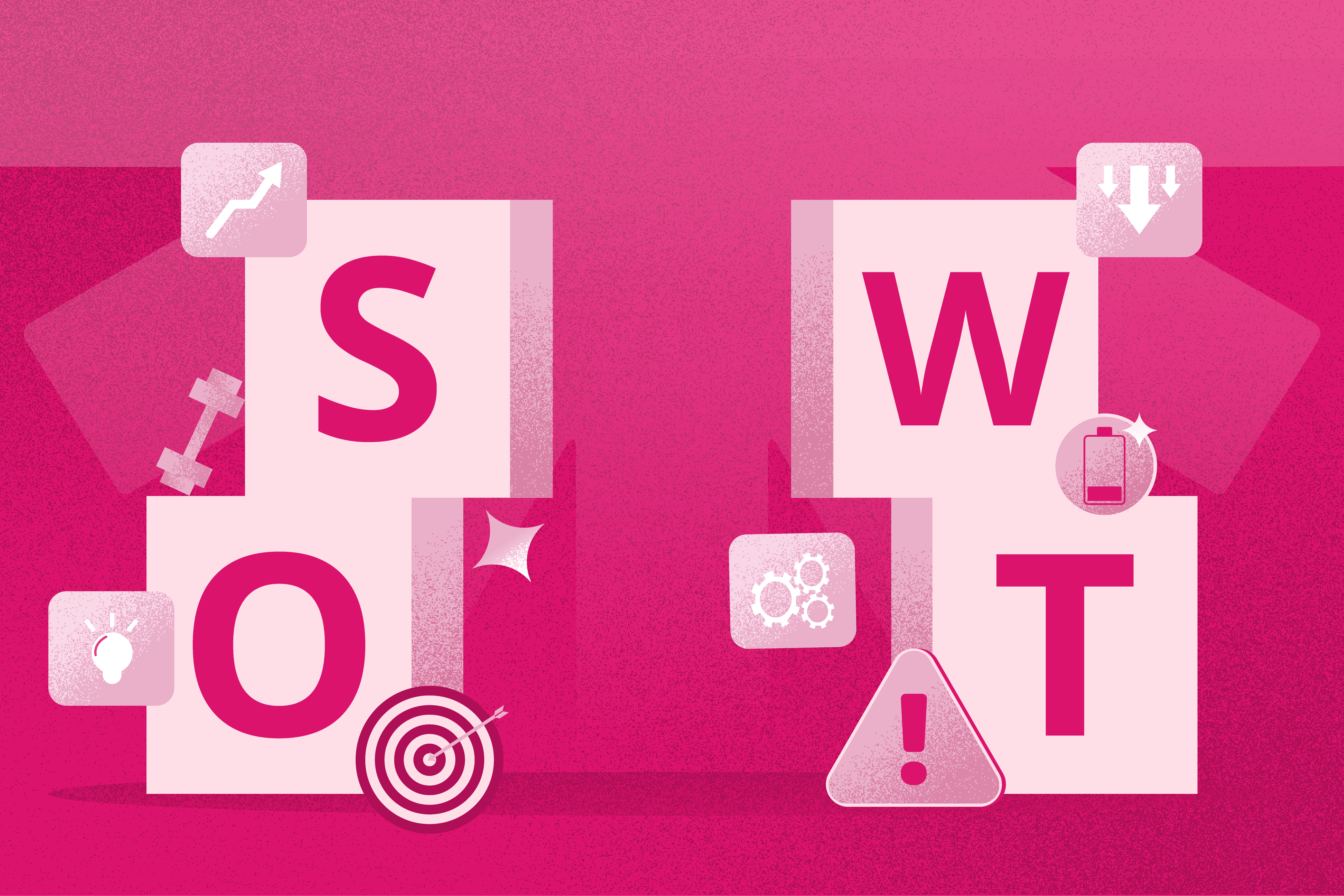
SWOT analysis is a well-established strategic planning technique used to evaluate the current situation of organizations by analyzing four key elements indicated by the acronym SWOT:
Strengths: Internal factors that distinguish the organization and give it a competitive advantage.
Weaknesses: Internal aspects that may hinder performance or need improvement.
Opportunities: External positive factors that can be leveraged to achieve growth or expansion.
Threats: External risks or challenges that may negatively impact the organization’s stability or success.
This analysis contributes to forming a comprehensive view of the organization’s internal and external realities, helping decision-makers build more informed strategies, set priorities, and utilize resources effectively.
Top 9 Benefits of SWOT Analysis
SWOT analysis is one of the essential tools in strategic planning, as it provides a comprehensive perspective that helps organizations understand their current situation and make informed decisions. Its benefits are manifested in several key areas, most notably:
1. Providing a Comprehensive View of the Current Situation
SWOT analysis helps evaluate both internal and external factors simultaneously, enabling the organization to understand its strengths and weaknesses, as well as the opportunities available and potential threats in the surrounding environment.
2. Supporting Strategic Decision-Making
The analysis provides a logical and systematic basis for decision-making, away from personal estimates or inaccurate impressions, enhancing the quality of planning and reducing risks.
3. Identifying and Effectively Leveraging Strengths
SWOT analysis highlights the organization’s strengths and transforms them into competitive advantages that can be built upon in growth and expansion strategies.
4. Uncovering Weaknesses and Addressing Them Early
By identifying internal shortcomings, the analysis gives the organization an opportunity to improve performance and optimize processes before these weaknesses turn into significant challenges.
5. Exploring External Opportunities
The analysis helps monitor market trends and changes, identifying opportunities that can be leveraged to enhance growth or improve market share.
6. Preparing for Threats and Reducing Risks
By analyzing potential threats, the organization becomes better prepared to face risks and can develop preventive plans to mitigate their negative impacts.
7. Enhancing Coordination and Integration Among Teams
When conducted collaboratively, SWOT analysis helps unify perspectives across different departments and fosters cooperation and understanding within the organization.
8. Turning Analysis into Actionable Plans
SWOT analysis is not limited to diagnosis; it serves as a starting point for building clear strategies and practical plans supported by defined objectives and performance indicators.
9. Enabling Continuous Updates and Monitoring
Digital surveys allow data to be collected repeatedly and quickly, making it easier to continuously update SWOT analysis and keep pace with changes in the organization’s internal and external environment.
Why Do You Need Digital SWOT Analysis?
Traditionally, SWOT analysis was conducted through brainstorming sessions and internal discussions, with results manually documented in reports or written summaries. Despite the simplicity of this method, it faces several challenges, most notably:
Slow execution and difficulty in repeating the analysis periodically.
Influence of personal biases and opinions not based on data.
Lack of transparency and difficulty in verifying result accuracy.
In contrast, digital SWOT analysis offers a qualitative leap in the way data is collected and analyzed, as it enables:
Reliance on objective, measurable, and comparable data.
Faster data collection and analysis.
Easy updates to the analysis as data changes.
Enhanced collaboration and integration among different teams and departments.
Visual presentation of results in a clear and easily shareable manner.
Comparison Table Highlighting the Differences:
Criterion | Traditional Analysis | Digital Analysis |
Execution Speed | Slow and dependent on meetings | Very fast and real-time |
Data Quality | Subject to personal biases and opinions | Objective and measurable |
Accuracy Level | Limited | High |
Result Sharing | Paper reports or live presentations | Interactive dashboards |
Updating Results | Difficult and requires rework | Simple and flexible with data updates |
Digital analysis does not eliminate strategic thinking; rather, it enhances it by providing a scientific and practical foundation that supports more confident decision-making.
The Importance of Asking the Right Questions in Digital SWOT Analysis
The effectiveness of digital SWOT analysis depends on the quality of the questions posed in surveys. Precise and specific questions help collect objective data that reflects the actual reality of the organization, while vague or general questions lead to superficial and unhelpful information. Here are over 40 questions for SWOT analysis to inspire deep strategic planning:
1. Strengths:
What does your company do better than anyone else? What unique resources or capabilities does your organization possess? This could be a strong brand, proprietary technology, a talented team, or accumulated experience over the years. Conversely, for startups, a lean structure, freedom from legacy burdens, and minimal constraints can be real strengths.
Example Questions:
What do customers value most about us?
Which products or services deliver the best results for us?
Where do we receive repeat business or customer loyalty?
In which areas do we outperform competitors?
What skills or capabilities distinguish our team?
What resources or capabilities do we possess that competitors find hard to replicate?
Which processes do we perform faster or more efficiently than others?
Which internal processes run smoothly and effectively?
What is our greatest cost advantage?
What past achievements can we build upon?
What partnerships or relationships enhance our market position?
What do competitors do that they try to emulate from us?
2. Weaknesses:
Where does your company struggle? Which areas need improvement? Perhaps you have high employee turnover, outdated systems, or internal gaps that hinder growth. Not all weaknesses are disastrous; acknowledging and addressing them consciously can transform them from obstacles into opportunities for growth.
Example Questions:
What factors affect our customer satisfaction?
In which tasks do we frequently waste time?
Which tools or systems slow down workflows?
What barriers prevent us from expanding?
What tools or skills does the organization lack?
Which departments experience high employee turnover?
What issues cause stress or conflicts within the team?
Which goals do we consistently struggle to achieve?
What recurring problems or complaints arise from customers or the team?
What factors make our work inconsistent or disorganized?
In which areas do competitors outperform us?
In which aspects do we overspend?
3. Opportunities:
What external factors can help your company grow? Is there an untapped segment or a new technology you can leverage? Opportunities are external possibilities outside your control that you can seize.
Example Questions:
Are there recent industry changes that could benefit us?
What market trends can we take advantage of?
Which new products or services are customers requesting?
Are there needs or problems we haven’t yet addressed?
What needs are currently unmet by the market?
What potential partnerships could support business growth?
Which gaps in our current offerings can be filled?
Which services can be expanded or improved?
Which processes can be automated to save time and effort?
Are there seasons or events we can plan around to boost performance?
How can we deliver products or services faster and more flexibly?
Which technologies or tools can improve our productivity?
4. Threats:
What risks should we prepare for? What external factors could harm your company? Is a new competitor entering the market, or are regulatory changes coming? These risks may hinder business progress and must be addressed directly. Awareness and anticipation reduce surprises and increase organizational readiness.
Example Questions:
Are there legal or regulatory changes that could affect us?
What market changes could negatively impact us?
Are there new competitors threatening our position?
Are operating costs rising faster than expected?
Is the supply chain under pressures that could hinder operations?
What risks arise from employee turnover?
Do customers trust new platforms or competitors more?
Is our technology at risk of becoming outdated?
Could major clients stop doing business with us?
Are we overly dependent on a single person or process?
How are customer expectations changing, and what impact does this have on us?
What external factors could limit our business growth?
Steps to Create a Digital SWOT Analysis Using BSure
Step 1: Define the Objective and Scope of the Analysis
Before using any digital tools or starting the technical design of the survey, it is essential to clearly define the scope of the SWOT analysis. Clear objectives and scope prevent obtaining general or non-actionable results.
This includes:
• Defining the purpose of the analysis:
Is the goal to evaluate the performance of a specific department, redirect corporate strategy, or analyze a new product or service?
• Defining the time frame:
Does the analysis focus on a short-term period to address current challenges, or is it part of annual or long-term strategic planning?
The more clearly the objective and timeline are defined, the more precise the questions and the more actionable the results.
Step 2: Identify Stakeholders
After defining the objective and scope, it is important to identify the relevant stakeholders to ensure accurate data collection and that the results reach those who rely on them for decision-making.
This includes:
• Identifying the teams or departments involved in data collection, whether across the entire organization, a specific department, or a particular product.
• Identifying the leaders or entities that will benefit from the SWOT analysis results in decision-making.
Clear stakeholder identification helps design an appropriate survey and prevents conflicting expectations or wasted results later.
Step 3: Analyze the Four SWOT Dimensions
At this stage, identify the organization’s internal strengths and weaknesses, and the external opportunities and threats, to form a comprehensive picture of the current situation that supports more accurate strategic decision-making.
Step 4: Organize and Analyze the Data
After collecting the data, the analysis phase begins. Digital analysis through the BSure platform facilitates:
Sorting the data
Filtering and refining responses
Aggregating answers
Identifying patterns and trends
The result is organized and clear data instead of scattered information that is difficult to utilize.
Step 5: Dashboards
BSure dashboards represent the stage where results are transformed into actionable insights that support decision-making.
Features of BSure Dashboards:
Interactive and clear presentation of results
Real-time analytics with automatic updates
Easy sharing of results with decision-makers
Ability to quickly compare different variables and dimensions
Step 6: Transform Results into Actionable Strategies
SWOT analysis delivers real value only when its results are translated into actionable plans. This is done by linking the analysis elements to develop clear strategies that leverage strengths, address weaknesses, seize opportunities, and mitigate threats.
Recommended actions:
Share results with decision-makers
Prepare a clear action plan
Define responsibilities and timelines
Prioritize based on impact and importance
Step 7: Continuous Review
Markets, competition, and operational conditions constantly change, so SWOT analysis should be treated as a living document that is periodically reviewed to update data and ensure strategies remain relevant and effective.
Conclusion:
SWOT analysis does not succeed merely by filling out forms; it relies on asking the right questions, collecting accurate data, and analyzing it objectively. With digital transformation, executing this analysis has become easier and more precise when using the BSure platform, which allows designing intelligent surveys to help organizations understand their reality, keep up with changes, and make informed decisions that confidently support growth and development.
Start Now with BSure!
Choose the plan that fits your needs, or try the trial offer to see for yourself how BSure makes SWOT analysis easier and more effective for making precise strategic decisions.