
Have you ever wondered why you engage more with an image than with text? How can a single image change the way participants respond to your survey? It’s often said that “a picture is worth a thousand words.” In market research, it might also be worth a thousand accurate responses. Image-based surveys don’t just attract attention, they transform data collection from mere reading into an interactive visual experience, where every choice is seen and understood instantly, providing faster and more accurate insights into your audience’s preferences and perceptions.
In this article, we’ll explore the concept of image-based surveys, their key benefits, main applications in market research and customer experience, and the best practices for creating an effective visual survey that ensures accuracy and boosts engagement.
Definition of Image-Based Surveys
An image-based survey is a type of questionnaire that uses images as the primary medium for presenting questions or answer options instead of relying solely on text.
In other words, images are not just decorative elements, they are an essential part of the measurement and data collection process.
This type of survey is typically used when the goal is to understand visual impressions, aesthetic preferences, or emotional reactions toward certain elements such as advertisements, packaging, designs, or even the products themselves.
For example:
Instead of asking participants, “Which juice packaging do you prefer?” and listing names, you can show images of the different packages for them to choose from.
This makes the responses more accurate and genuine since people generally respond to visuals faster and more clearly than to text.
8 Benefits of Image-Based Surveys
The importance of image-based surveys in market research and customer experience is growing rapidly due to their practical advantages over traditional text-based surveys. Here are the main benefits:
1. Faster Information Processing and Time Efficiency
Visual content is processed and understood much faster than text, the human brain processes images up to 60,000 times faster than written words.
In such surveys, participants can simply view and select images instantly, reducing mental effort and saving time. The result is a smoother and quicker experience that increases completion rates.
2. Higher Engagement and Participation Rates
Images naturally capture attention more effectively than text, making participants more eager to engage. Studies show that around 40% of people respond better to visual content, which directly leads to higher participation and completion rates compared to traditional surveys.
3. Improved Response Accuracy
When participants see an image rather than imagining it, their responses become more realistic and precise, especially for questions involving colors, designs, advertisements, or packaging.
Research indicates that people remember 80% of what they see, compared to 20% of what they read and 10% of what they hear. This highlights how visuals enhance memory and impression accuracy, allowing organizations to gather more reliable and authentic data.
4. Alignment with Modern User Preferences
In today’s fast-paced world, users favor quick, simple, and visually engaging content.
Studies show that 95% of B2B buyers prefer short, image-rich content over long text-based material. This makes image-based surveys a perfect fit for modern behavior patterns.
5. Overcoming Language Barriers
Images are a universal language that everyone understands without translation or lengthy explanations. This makes visual surveys suitable for culturally and linguistically diverse audiences, enhancing clarity and accuracy.
Furthermore, 90% of the information processed by the brain is visual, making image-based questions more enjoyable and accessible.
6. Measuring Emotional and Visual Impressions
Images can evoke immediate emotions such as attraction, comfort, or aversion. This gives researchers deeper insight into participants’ emotional responses, especially when testing brands or marketing campaigns.
7. Ease of Design and Use
Modern survey platforms, such as BSure, offer advanced tools for creating image-based surveys efficiently. Users can upload images, customize questions, and share the survey in minutes.
8. Ideal for Brand and Advertising Tests
Image-based surveys are highly effective for measuring logo recall, ad impact, and brand identity perception. Studies show that using visuals in surveys can increase brand awareness by 20% and purchase likelihood by 40%, making them a powerful tool for boosting marketing strategy and measurable results.
In short, image-based surveys turn data collection from a dull interrogation into a smart and enjoyable visual experience.
Comparison: Image-Based vs. Traditional Surveys
Element | Traditional Survey | Image-Based Survey |
Display | Relies solely on text for questions and answers | Uses images primarily, with or without supporting text |
Interaction Style | Requires reading and comprehension, which may cause fatigue or boredom | Quick visual choices, providing smoother and more engaging experience |
Completion Time | Longer, due to the need to read each question and answer carefully | Much shorter, as participants select images directly |
Engagement Level | Moderate to low, especially for lengthy surveys | High, thanks to visual appeal and ease of interaction |
Response Accuracy | May vary based on participant interpretation | High accuracy since images convey meaning instantly |
Experience Appeal | Formal and less stimulating | Modern and visually enjoyable |
Audience Suitability | Suitable for readers who prefer detailed text | Ideal for younger, visually oriented participants |
Common Uses | Public opinion polls, service evaluation, academic research | Market research, ad testing, product and design evaluation |
Language Barrier | May require translation and clarification | Eliminated through visuals that communicate universally |
Data Analysis | Based only on textual or numerical responses | Enables analysis of visual and emotional impressions |
8 Key Applications of Image-Based Surveys
Image-based surveys are widely used in market research and customer experience, particularly when visual or emotional feedback is essential. Here are the top applications:
1. Product Development and Concept Testing
Teams can test product ideas and new features during development to gauge consumer acceptance before launch. Images can be used to evaluate product design, packaging, logos, and colors, helping determine which options consumers prefer.
These surveys save time and resources while ensuring the product aligns with audience expectations.
2. Ad and Marketing Campaign Testing
Image-based surveys are excellent for measuring ad impact, logo recall, and audience perception of a brand. Respondents can indicate which ad feels more convincing or trustworthy, providing fast, detailed insights.
Read more: Marketing Surveys: Types and the Best Ways to Understand Customers Smartly.
3. Logo and Visual Identity Testing
A poorly received logo can cause financial losses and brand embarrassment.
Visual surveys allow brands to test their logos before launch to ensure alignment with audience taste and measure reactions accurately.
4. Brand Tracking
Images help measure the traits consumers associate with your brand, such as innovative, modern, useful, or fun.
Open-ended questions like “Why did you choose this image?” can be added for deeper understanding of brand perception.
Read more: 20 Questions In A Brand Perception Survey: How Customers Really See You.
5. Visual Preference and UX/UI Testing
Different layouts or interface designs can be presented to determine which users prefer. In website or app design, visuals show how participants respond to specific elements like buttons, colors, or layouts.
6. Educational and Training Research
Images help analyze how students or trainees perceive information, such as diagrams and infographics, making it easier to assess comprehension and visual learning.
7. Digital Marketing and Rapid Market Testing
Image-based surveys can be distributed via email or social media to quickly gather audience feedback on new products or campaigns, providing accurate and timely insights.
8. Measuring Emotional and Behavioral Impressions
Images trigger instant emotional responses, allowing a more precise understanding of participants’ feelings toward a product, service, or idea.
6 Best Practices for Creating an Effective Visual Survey
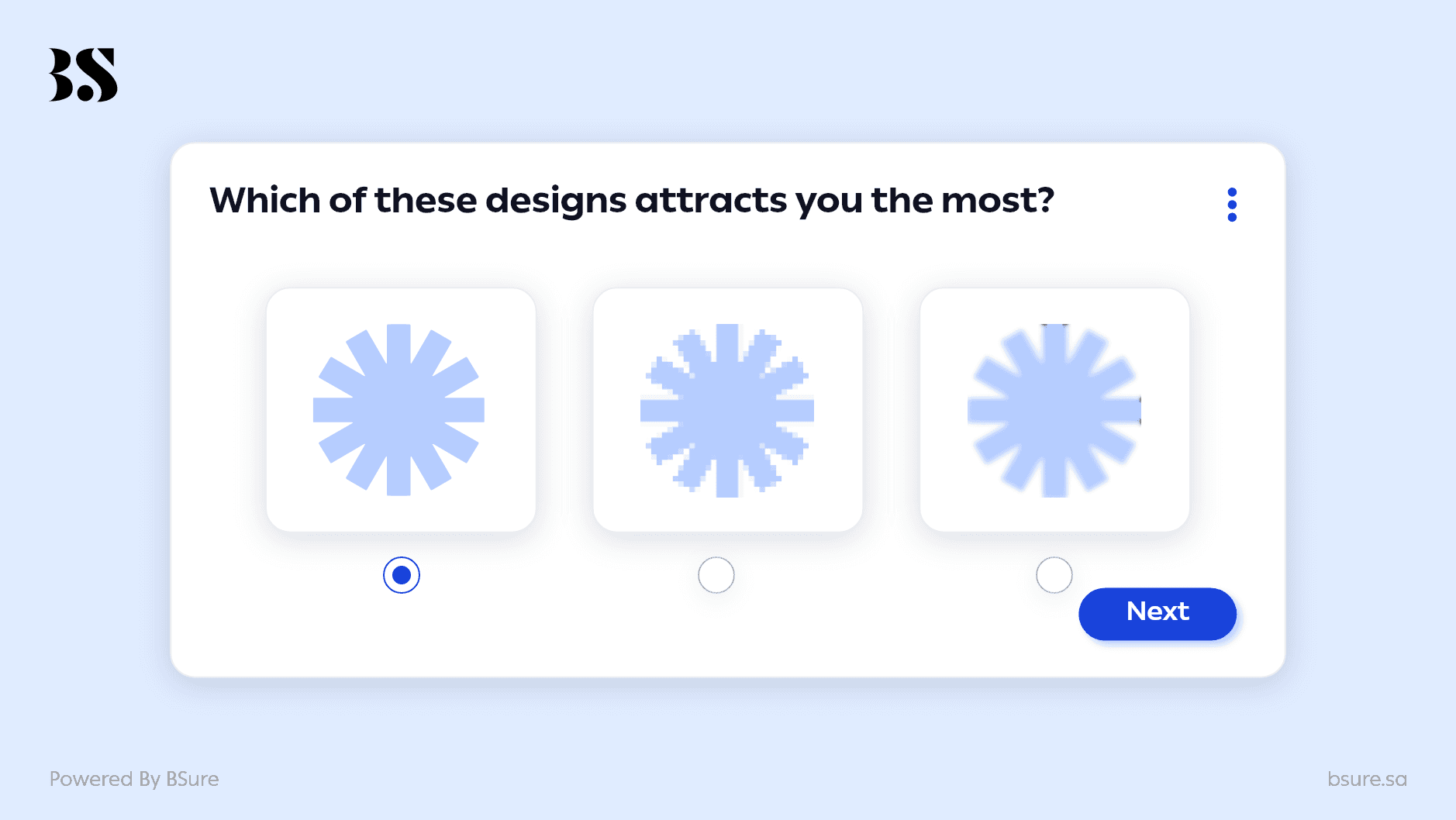
1. Use High-Quality Images
Each image should be of high quality to ensure fairness and accuracy. Avoid blurry or poorly lit photos that can bias responses, as participants may unconsciously prefer clearer images.
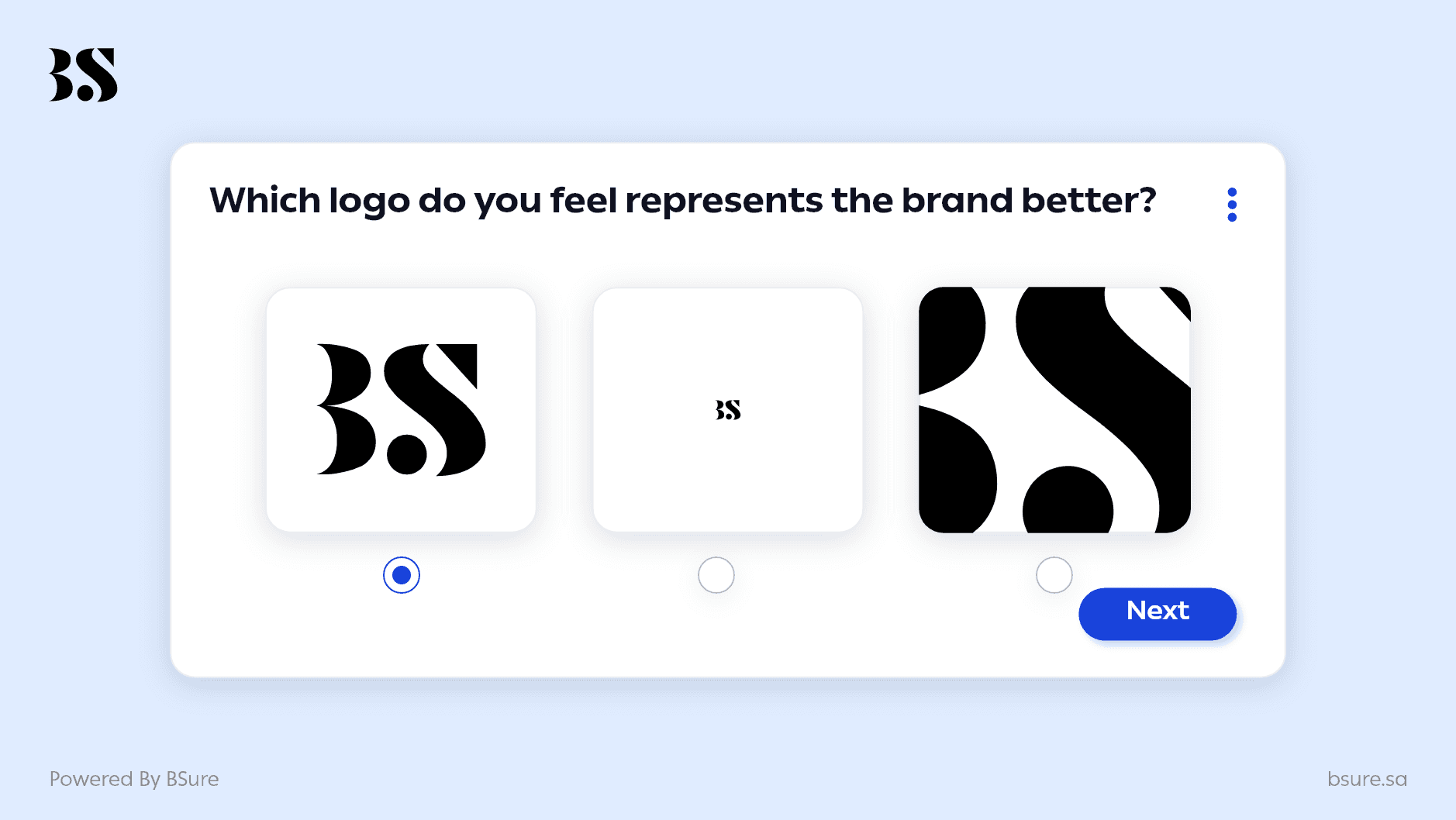
2. Maintain Uniform Image Sizes
Ensure all images are the same size to avoid visual bias. Optimize image file sizes for fast loading and consistent display on all devices.
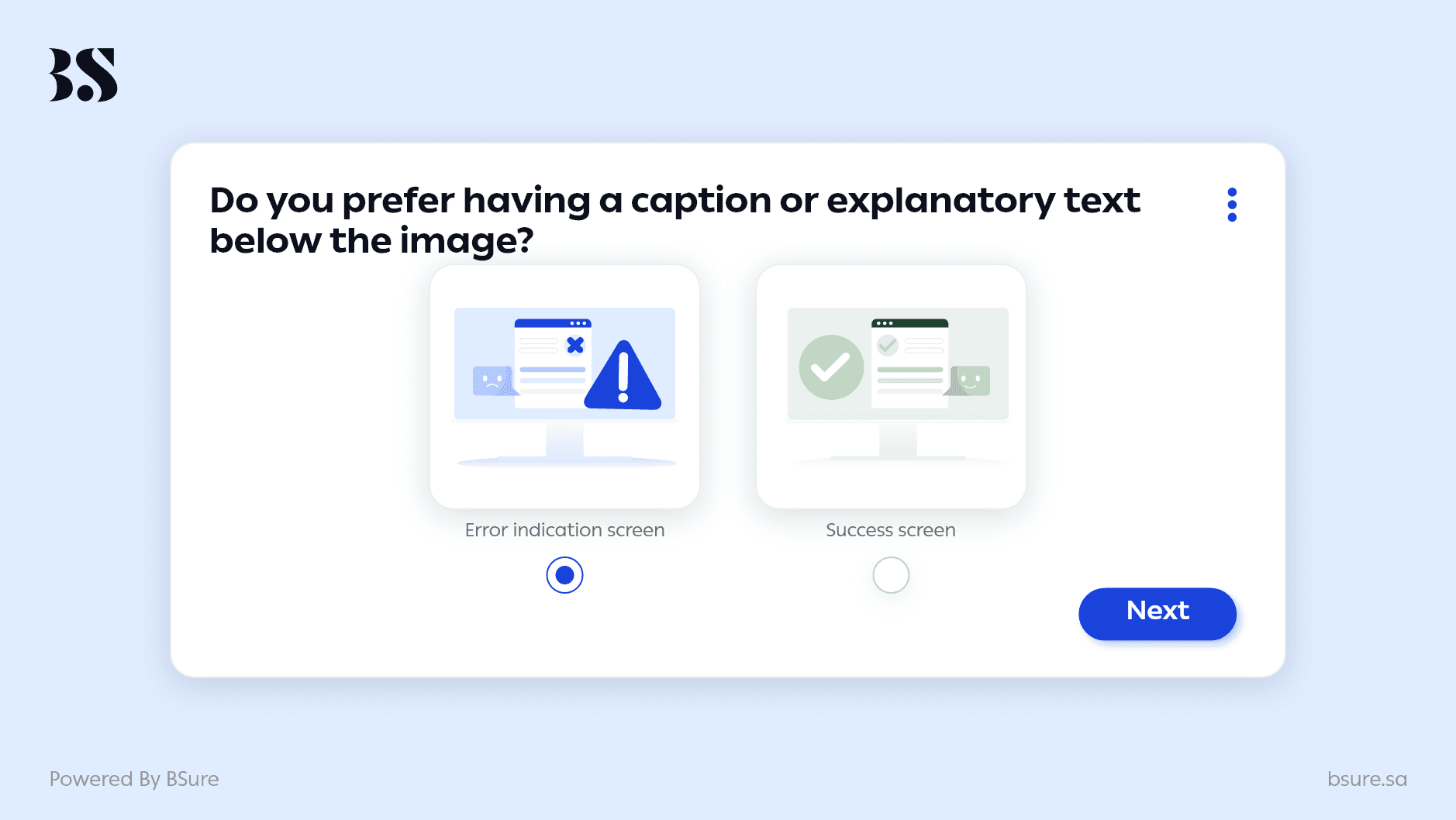
3. Add Simple Captions
Include short labels or captions under each image to clarify the question or meaning, improving participant understanding and analytical precision.
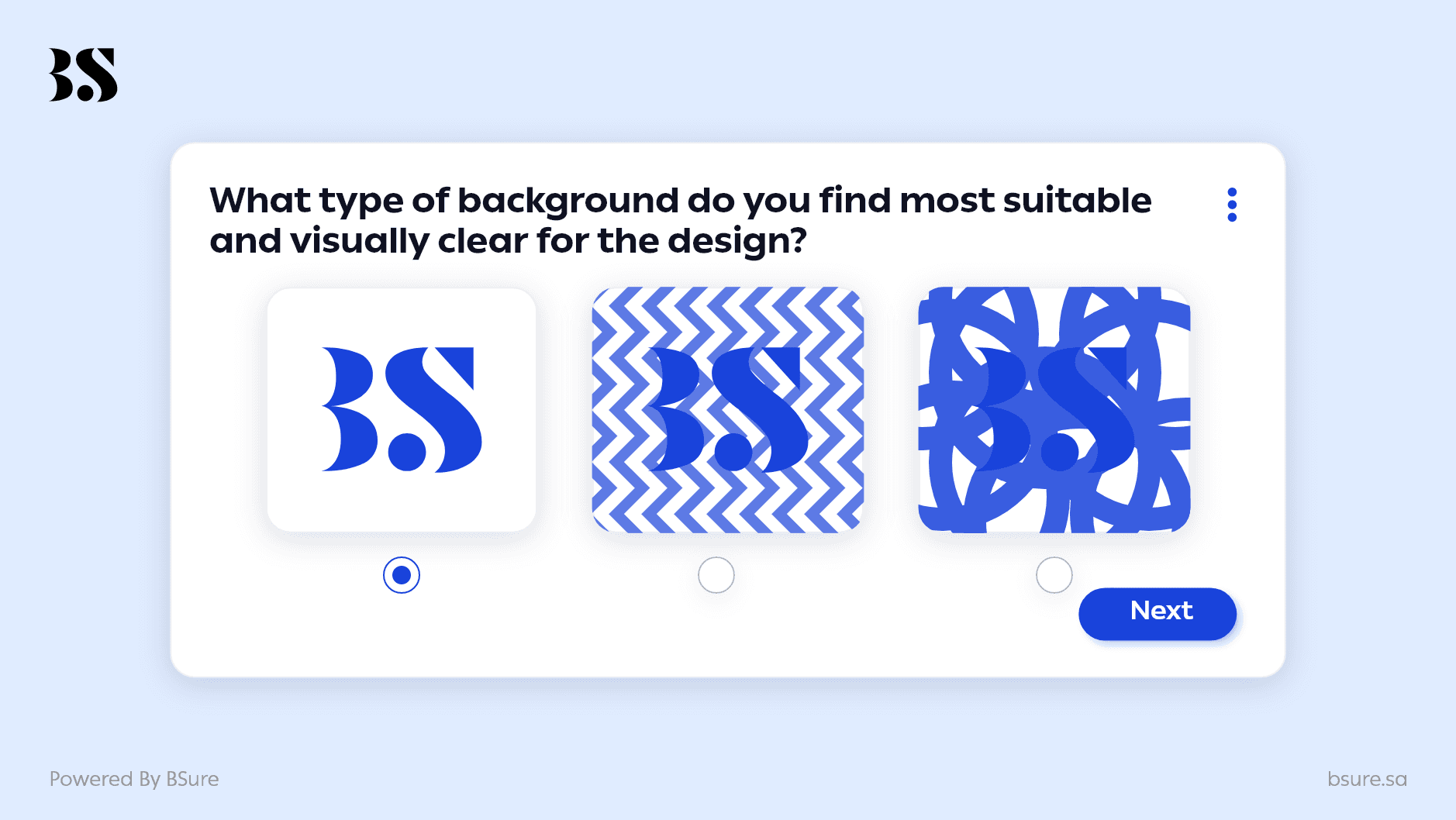
4. Choose a Neutral Background
Use a simple, neutral background to highlight images and keep the survey visually clear. Avoid cluttered backgrounds that distract participants, and adjust contrast for better visibility.
5. Avoid Visual Overload
Use images only when necessary, preferably no more than four per question, to prevent distraction and help participants stay focused.

6. Analyze Results Visually
After publishing, monitor participant choices and visual response patterns. Use charts and reports to interpret audience preferences and behaviors, supporting data-driven marketing and product decisions.
Read more: Types of Survey Bias and How to Avoid Them.
Conclusion:
Image-based surveys offer an effective tool for enhancing data accuracy and gaining deeper insights into participant preferences.
Adopting this approach ensures the collection of reliable information and supports well-informed strategic decisions.
Start now with BSure! and turn your data collection process into an engaging, intelligent visual experience.